Building
Printly
Runs a packaging print shop under its own name: storefront, design studio, back office.
- What it is
- Web platform · White label
- Year
- 2025–2026
- What we ran
- Drawing · Building
- Built with
- Next.js · React · Supabase · Drizzle · Tailwind
The problem
A print shop's customer relationships run on email, phone calls and spreadsheets. The customer struggles to describe what they want, the shop re-quotes three times, and the production schedule lives somewhere nobody outside the building can see.
Three surfaces, one job
The customer gets projects, assets, orders, quotations, messages and settings: a place to see what was ordered and where it is.
The shop gets the back office: customers, quotes, orders, production, inventory, invoices, dielines, users and reports.
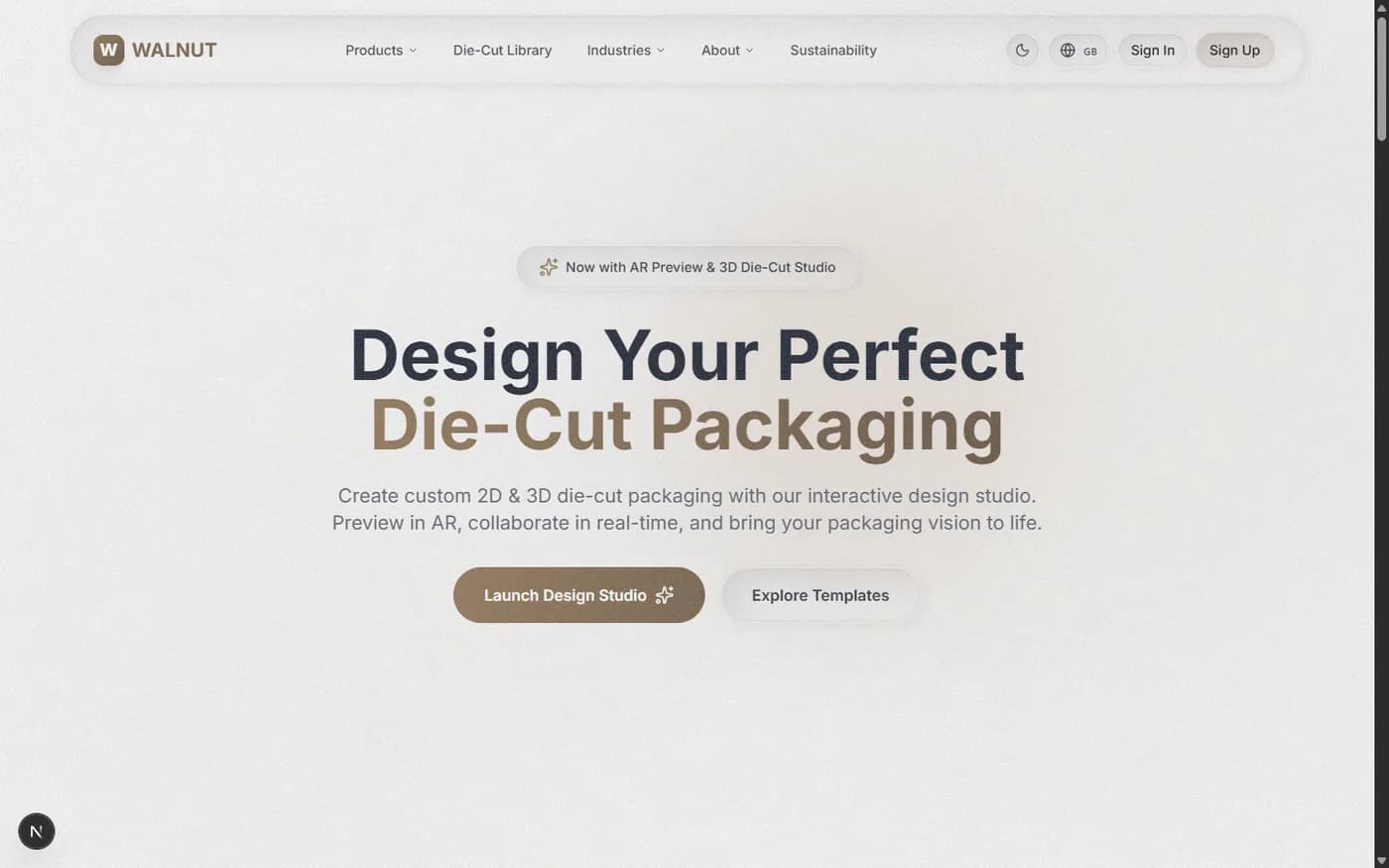
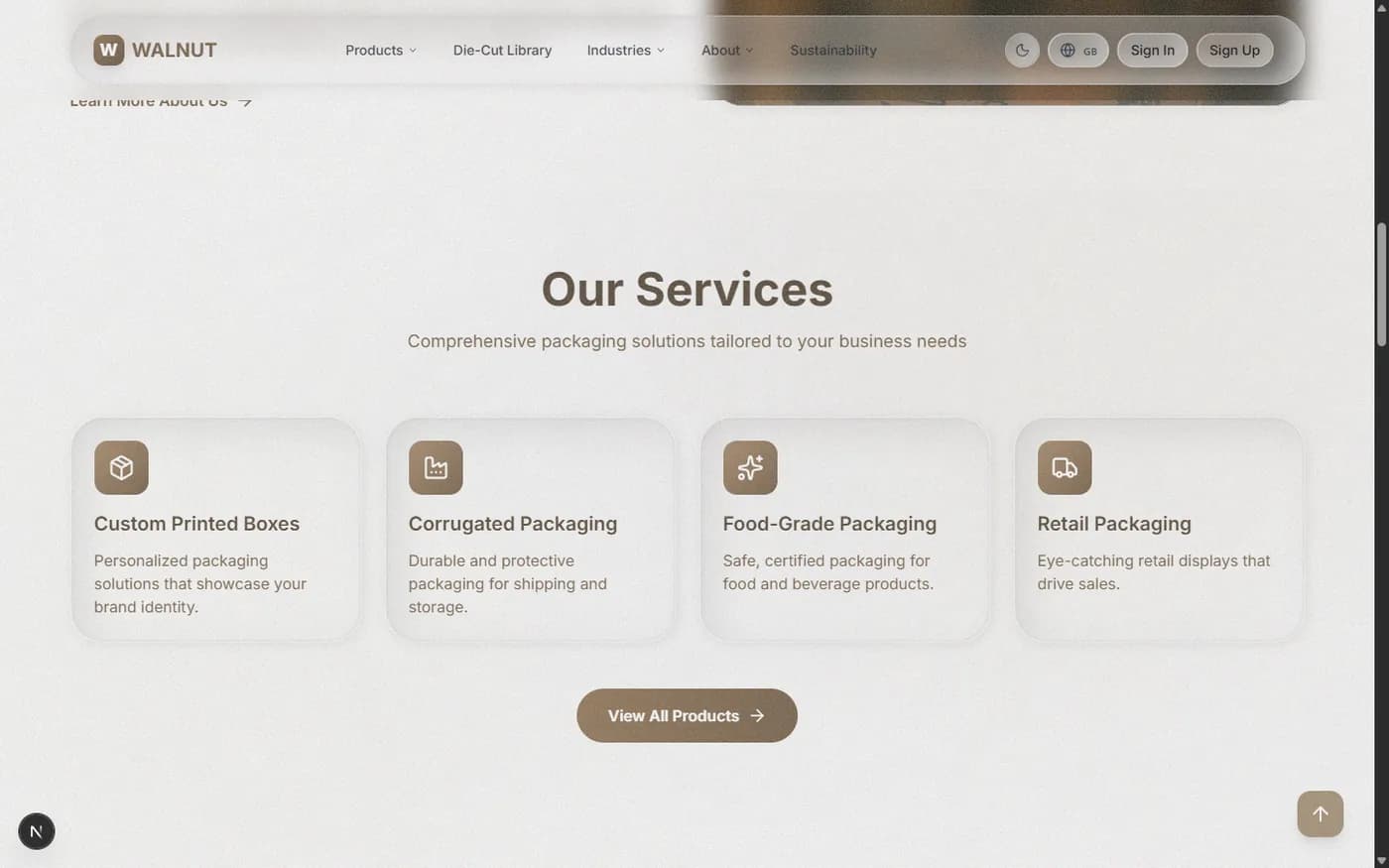
The public gets the storefront: a catalogue, the die-cut gallery, a blog, and a quote request that arrives as structured work rather than an email.
The platform manages the whole lifecycle, from quote request through packaging design and production scheduling to invoicing and delivery.
White label, properly
Shops deploy under their own brand on a subdomain or a custom domain. Their customers never see the platform underneath. They see the shop, throughout. The tenant is resolved per host, which is what makes one deployment serve many shops without any of them knowing about the others.
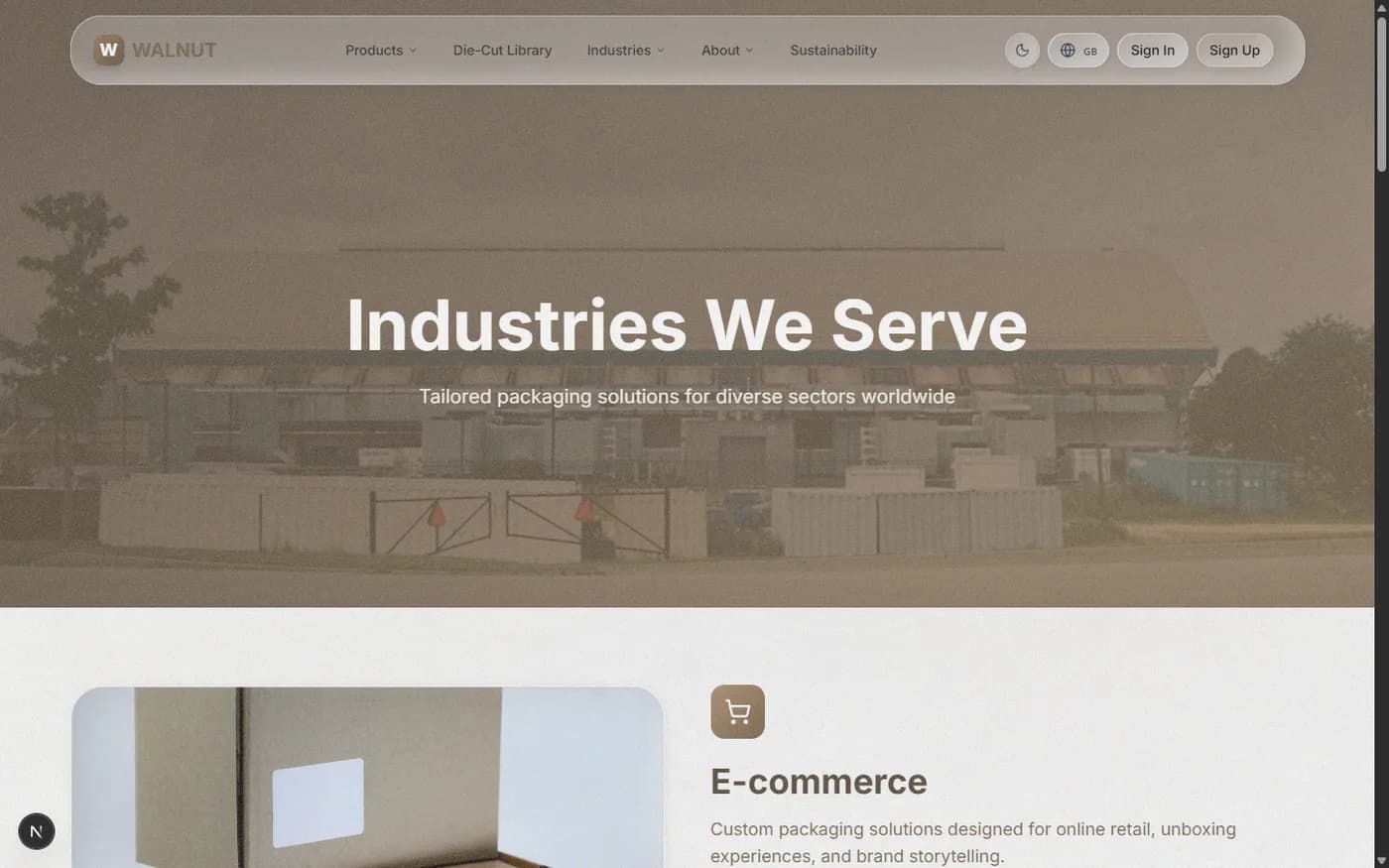
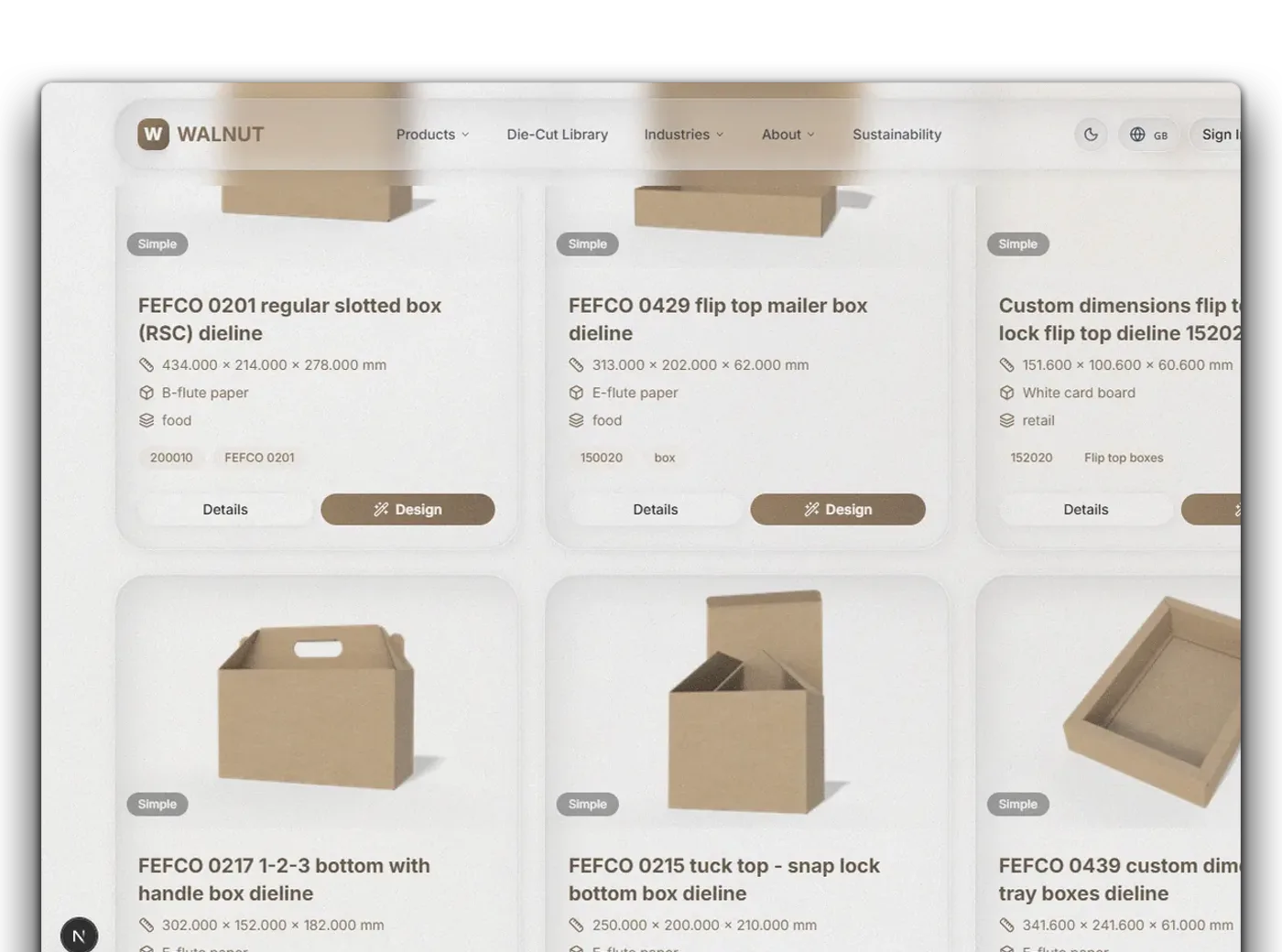
The shop shown throughout these screens is Walnut, our own firm. It is the tenant we build against, so what you are seeing is the white label working rather than a mock-up of it.
The die-cut library
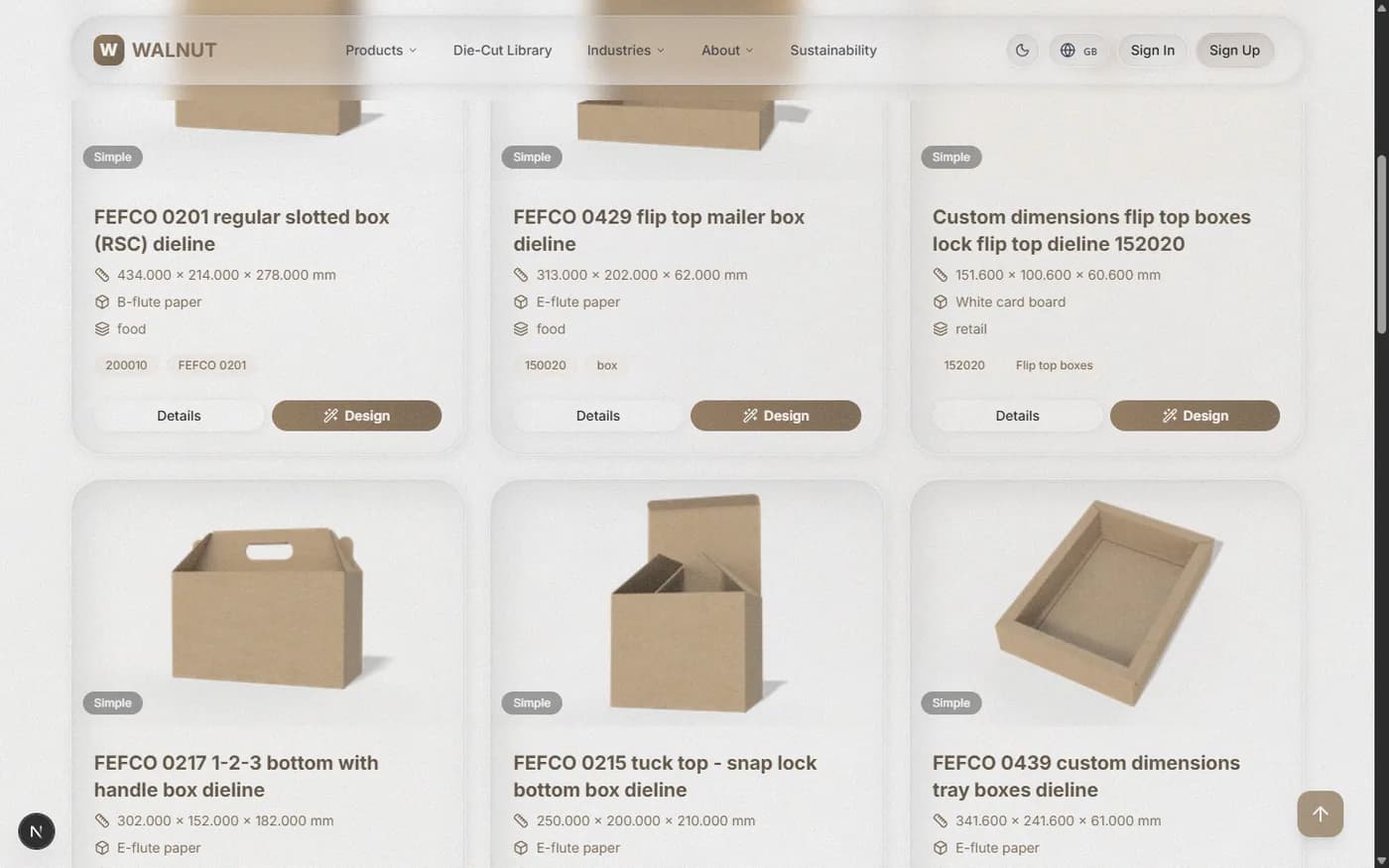
The part that makes it credible to a print buyer. Every template carries its FEFCO code, real dimensions in millimetres, board type and industry tags, and every one of them opens directly in the design studio rather than downloading as a file someone has to interpret.