Housing
ClaudeTalks
Speaks and listens for a coding agent, on your own machine. Nothing leaves the room.
- What it is
- Desktop tool
- Year
- 2026
- What we ran
- Housing · Thinking · Drawing
- Built with
- Python · local Whisper · local TTS · Electron
Two halves
It speaks. A local text-to-speech service, an output style and a skill. The agent writes its own spoken line at the end of a turn: not a reading of the terminal, but what a colleague would say from across the room. "Race is fixed. Three tests still failing, all Windows path stuff."
It listens. An always-on microphone, local Whisper, and a name gate. You say "hey Claude" and talk. No hotkey, no button, no browser tab.
The island
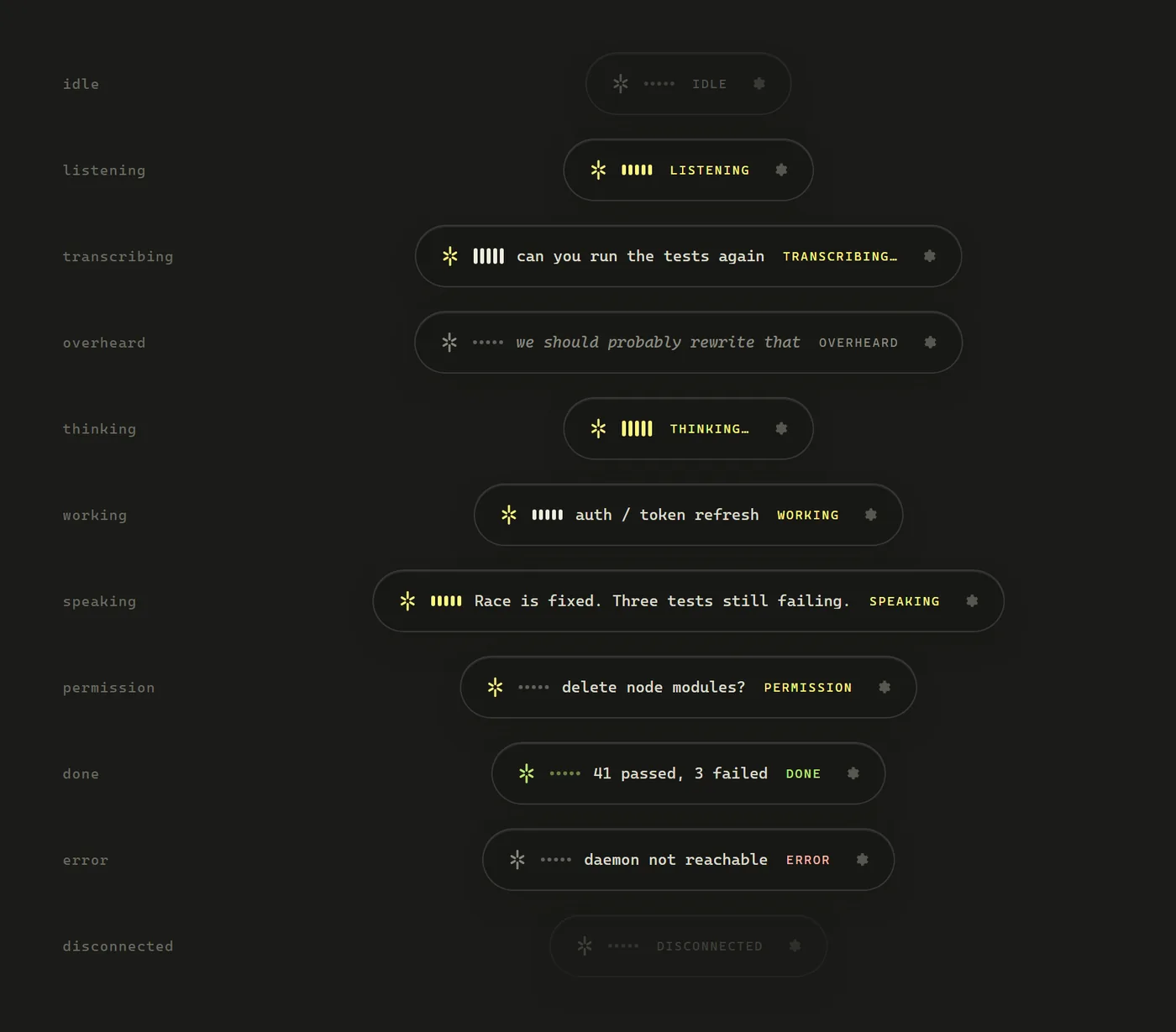
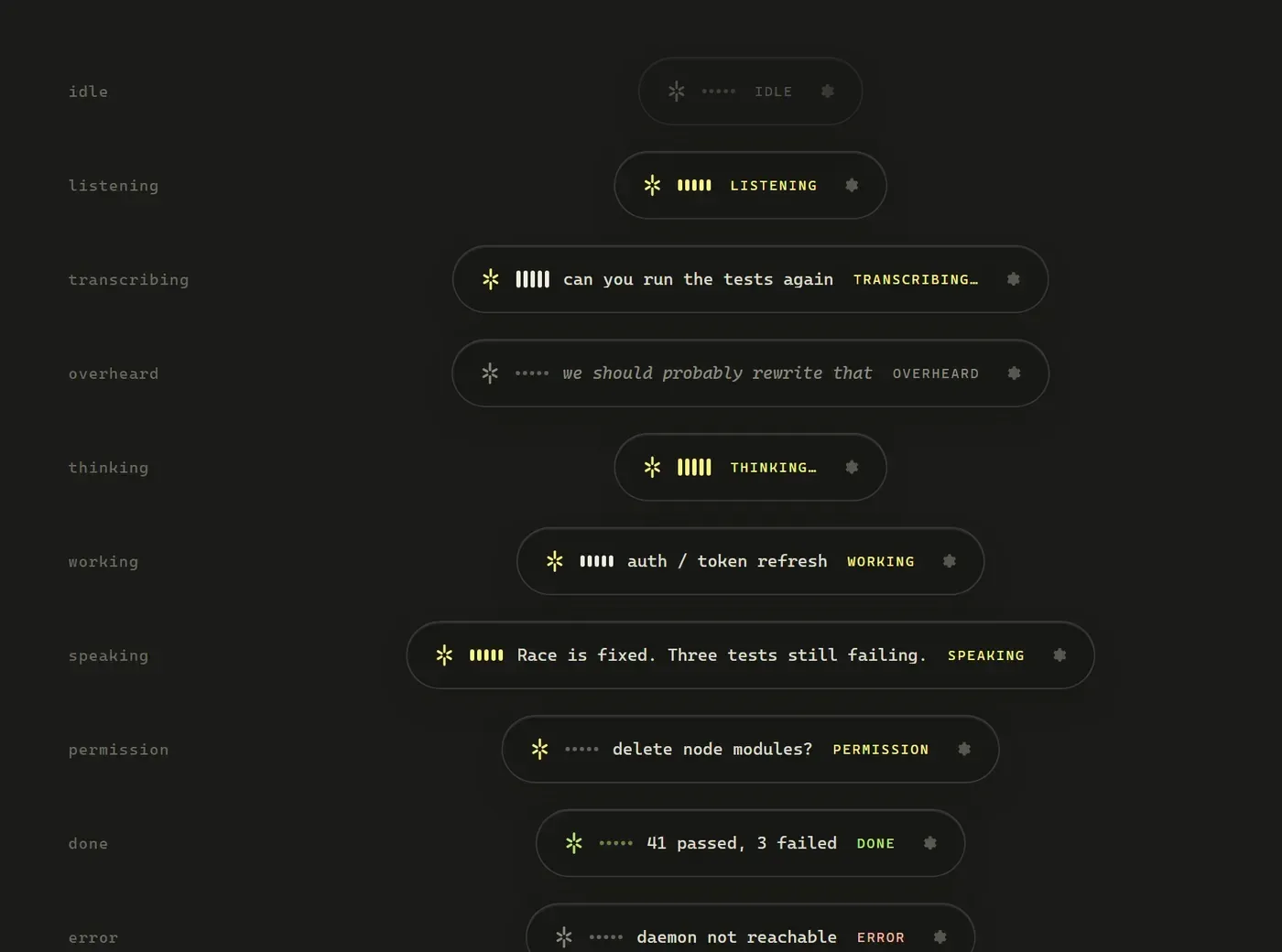
An always-on-top pill showing what the agent is doing. One row, always. A heads-up display that grows a second line is one you read instead of glance at, and glancing is the entire job.
It has no buttons. Per-turn approve and deny controls were built and then removed: the premise of the product is that your attention is elsewhere, so a small target needing a mouse asks for the one thing you do not have. The gear is the exception, because choosing an audio device is deliberate, rare, and cannot be done by voice. The whole difficulty is that three identically-named endpoints are indistinguishable until you hear one.
The state worth building for is overheard: the moment the system hears something and correctly decides it was not addressed to it. Watching that land right, repeatedly, is what turns an open microphone into something you stop thinking about.
Why it runs locally
No API calls to speak, no per-character billing, no account, and no audio of your room leaving your machine. Speech is the one modality where that last point stops being a preference.
The mark
The island was already drawing two symbols side by side to say one thing: a sparkle and a five-bar level meter. The logo is those two collapsed: a radial burst whose ray lengths run as a waveform. A spark at a glance, sound on the second look.
It sits in the same visual family as Claude's own mark deliberately, and stops there.